
Resources to help handlers and dogs learn together. Guides, exercises, ideas, and tools for every stage of the training journey.
Each page has a Snapshot for those who like to jump in and start practicing, as well as detailed text for when a Deep Dive is wanted or needed. Links to Step-By-Step instructions and video are included when possible.
We’ll start with Fundamentals, because there are many things in the big picture more important than actual obedience commands. Scroll down to find Obedience, Canine Life Skills and articles to help you improve on Your End of the Leash.
Foundations
Foundations are important. Don’t skip this section. Your life with your dog is built on Clarity. A dog that is not given clear, consistent guidelines will either make their own rules (becoming headstrong and pushy), or will become unsure and insecure, not being able to trust the world around them or their ability to make decisions. Clarity provides a dependable framework of communication, both in word (cues) and action (following up with the dog). You use the word, you show the dog. The Windows Model provides the dog clarity on general expectations of how to behave in any situation. Fulfillment is the other big one. It will be much, much more difficult to have dependable responses or a good relationship with a dog who is unfulfilled, frustrated and bouncing off the walls. Make everything easier, start with Foundations, then you can quickly jump into obedience training.
Assessment- Where to Start
Fulfillment: Drives & Behavior
Clarity & The Windows Model
The Leash & Frustration
Problem Behaviors
Your End of the Leash
Play
Obedience
There are only about 5 training concepts a pet dog needs to know to suceed:
- When to focus – such as when they hear their name
- A behavior of immobility, like sit, down or place
- How to walk politely on leash
- Recall
- To yield possession (give), or more generally, to stop doing something (leave it)
Of course, you can build on this and teach a lot more, depending on what you need and how much nuance you want. It is important to make training pleasant, and use lots of reinforcement. It is also important to teach each concept is a criteria for the dog to maintain until released, and is non-optional. There are four phases of training, that if done correctly, teach the dog to make good choices without a lot of managment or conflict. Foundations are important, don’t skip that section.
Work on a couple new things per week. Continue practicing on the old things to refine time and make progress. This can seem like a lot by the time you get to week 4 or so, but remember that once you’ve leveled up, you can go into maintenance mode. The hard work is only for a few weeks.
Attention
Loose Leash Walk
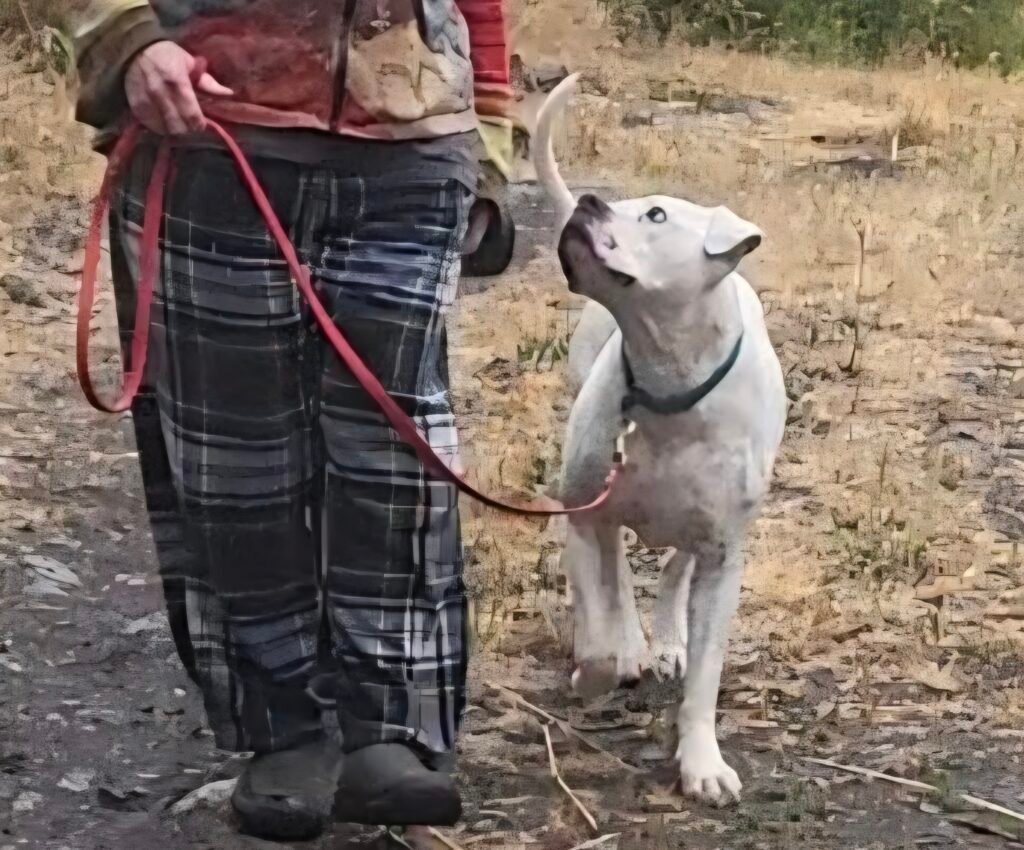
Loose Leash Walk